








Giới thiệu
For law enforcement officers, a flashlight is not just a tool — it is essential equipment that can mean the difference between safety and danger in low-light operations, traffic stops, building searches, and tactical entries. A duty-grade tactical flashlight must deliver reliable performance under stress, withstand harsh conditions, and integrate seamlessly with an officer’s existing gear.
This guide walks distributors, procurement officers, and brands through the key factors to evaluate when selecting tactical flashlights for law enforcement use, and how to match the right specifications to operational requirements.
1. Brightness (Lumens): How Much Is Enough?
Lumens measure total light output, but for law enforcement use, usable brightness matters more than the peak number on a spec sheet.
|
Operational Scenario
|
Recommended Lumens
|
Rationale
|
|
Everyday patrol / traffic stops
|
300–800 lumens
|
Sufficient for illumination without excessive battery drain; avoids over-spill that can compromise night vision
|
|
Building search / tactical entry
|
800–1500 lumens
|
Floods interior spaces, disorients non-compliant subjects
|
|
Outdoor search / long-range
|
1500–3000+ lumens
|
Reaches deeper into yards, alleys, and open terrain
|
|
Weapon-mounted / backup
|
200–600 lumens
|
Compact, lightweight, pairs with long guns or sidearms
|
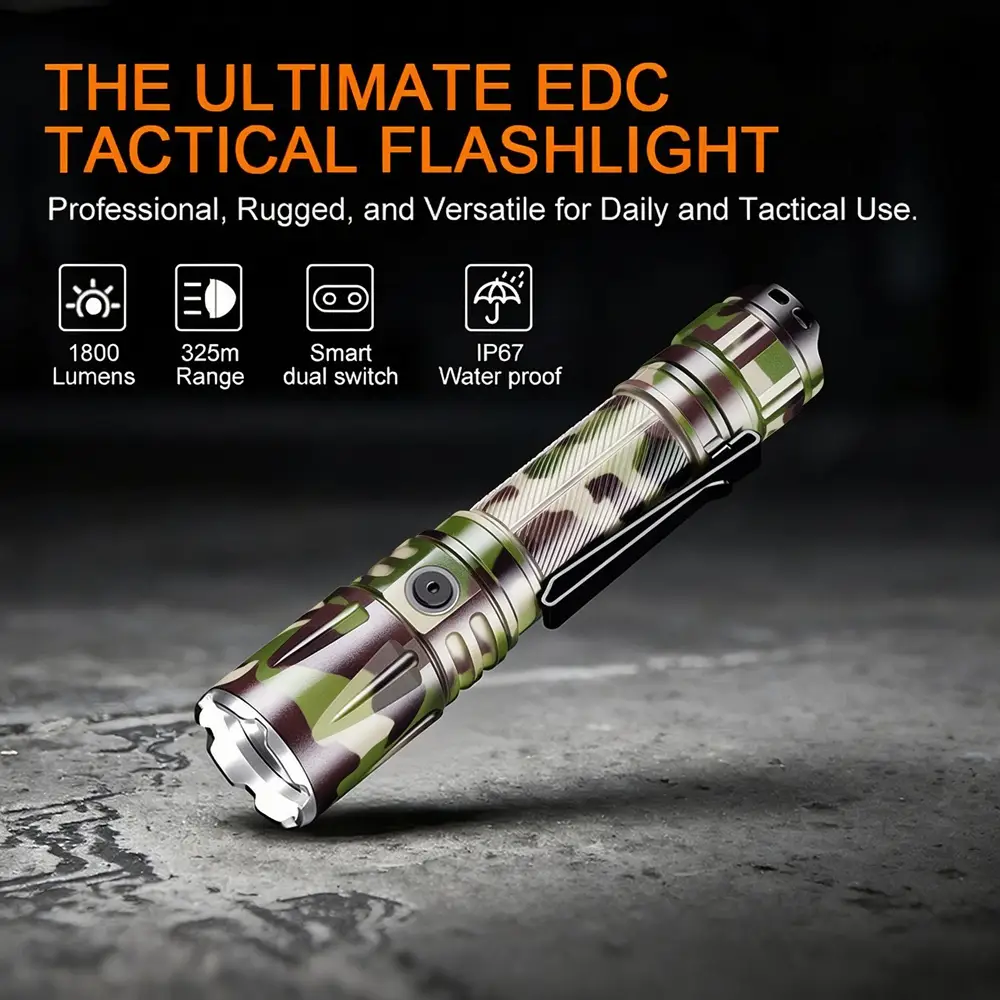
Key consideration: A flashlight with multiple brightness modes allows officers to adapt to the situation. A 1000-lumen light with a 100-lumen low mode is more versatile than a single-mode 2000-lumen light.
2. Beam Distance and Beam Profile
Law enforcement flashlights need to balance throw (distance) and flood (width of coverage):
- Throw-focused beams (narrow, concentrated): Ideal for outdoor searches, perimeter checks, and long-range identification. Look for beam distances of 250–500+ meters.
- Flood-focused beams (wide, even): Better for building searches, traffic stops, and close-quarters operations.
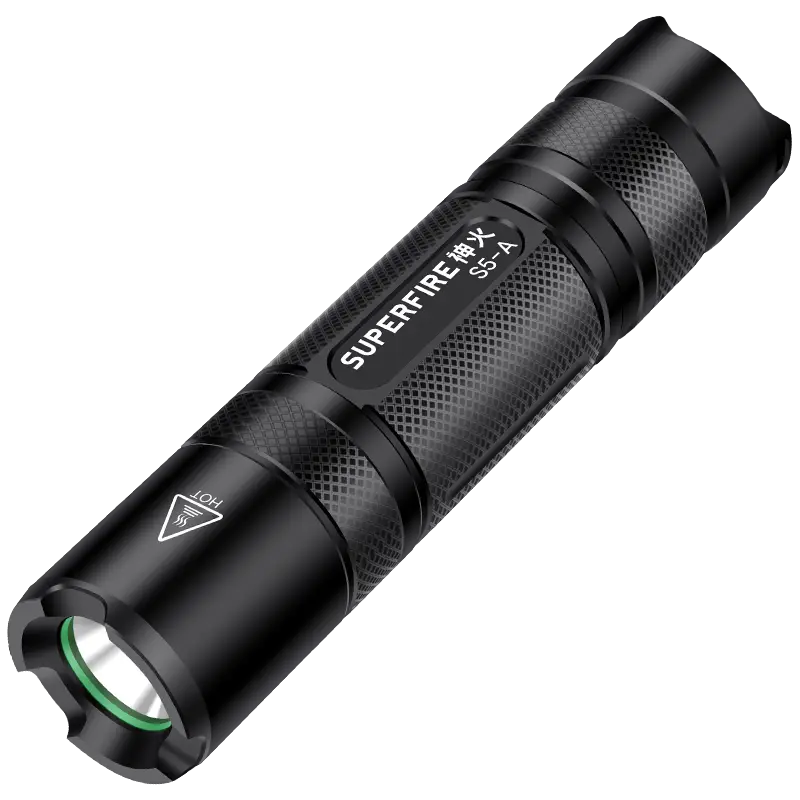
- Adjustable focus / zoom: Some models offer a twist-head or sliding focus mechanism, allowing officers to switch between flood and throw — useful for multi-role duty carry.
For most patrol applications, a moderate throw with usable spill (150–300 meters) is the most practical choice.
3. Runtime and Battery Type
Battery life directly affects operational readiness. Consider these options:
|
Loại pin
|
Pros
|
Cons
|
Best For
|
|
Rechargeable 18650 / 21700
|
High capacity, USB-C charging, cost-effective long-term
|
Requires charging infrastructure
|
Daily patrol, agency-issued lights
|
|
CR123A (disposable)
|
Long shelf life, works in extreme cold, no charging needed
|
Higher ongoing cost, waste
|
Backup lights, occasional use
|
|
Dual-power (rechargeable + CR123A)
|
Maximum flexibility, never stranded
|
Slightly larger/heavier
|
Agencies with mixed operational needs
|
Runtime expectation: A duty light should deliver at least 1.5–2 hours on high mode and 8+ hours on low mode. Look for lights with a battery level indicator so officers know when to recharge.
4. Durability and Environmental Resistance
Law enforcement gear takes abuse. Evaluate:
- Housing material: Aircraft-grade aluminum (Type III hard-anodized) is the industry standard — lightweight, corrosion-resistant, and impact-absorbent.
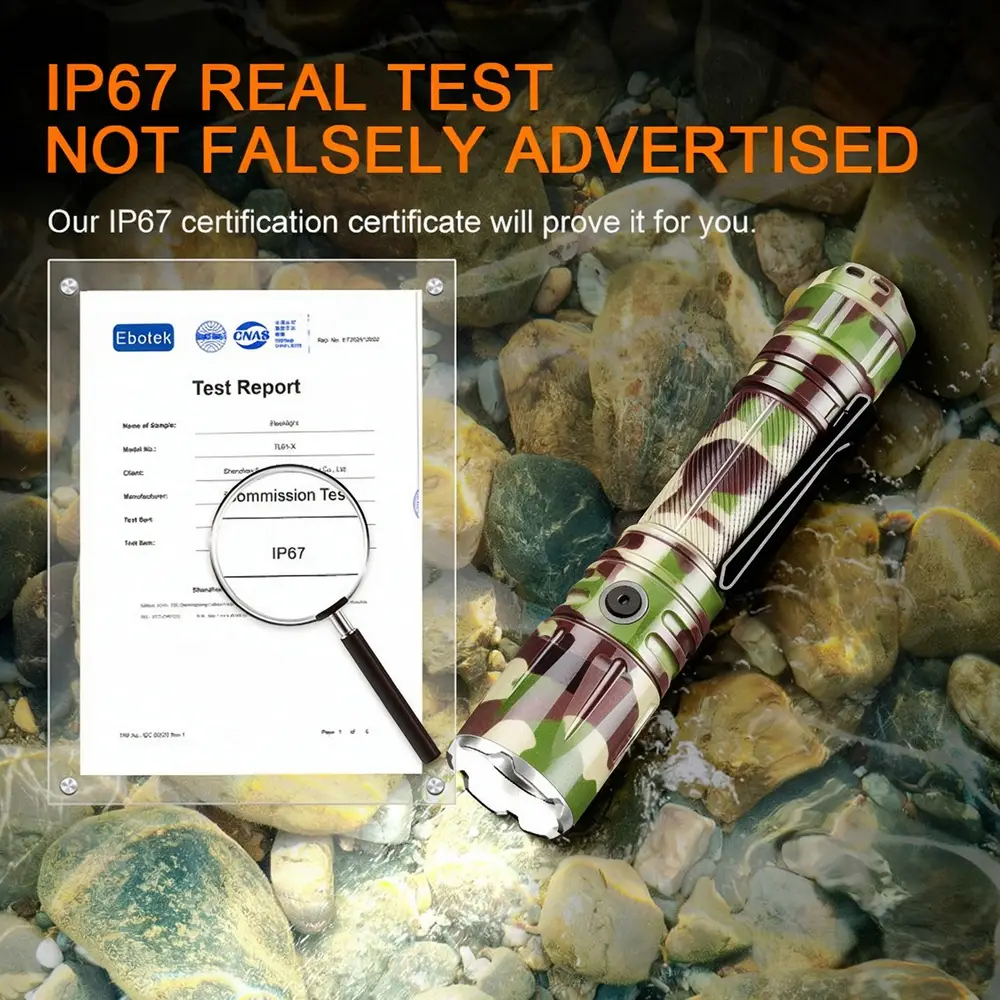
- Waterproof rating: IPX7 (submersible to 1m for 30 min) is the minimum for duty use. IPX8 (deeper/longer) is preferred for marine and search-and-rescue units.
- Drop rating: Look for lights tested to 1–2 meter drops onto concrete.
- Impact resistance: A crenulated or beveled bezel can serve as a glass breaker or impact tool in emergencies.
- Operating temperature: Should function reliably from -20°C to +50°C for year-round deployment.
5. Switch Interface and Ergonomics
Under stress, officers operate by muscle memory. The switch design must be:
- Tail-cap switch: Most common for tactical use — allows one-handed operation with a forward grip. A momentary-on function (press and hold for temporary light, click for constant-on) is essential.
- Side switch: Easier for mode cycling but can be accidentally activated in a holster.
- Dual switches (tail + side): Offer the most control but add complexity.
- Anti-roll body: A squared or hexagonal cross-section prevents the light from rolling off surfaces.
- Grip texture: Knurling or textured grip ensures secure handling with wet or gloved hands.
6. Size, Weight, and Carry Options
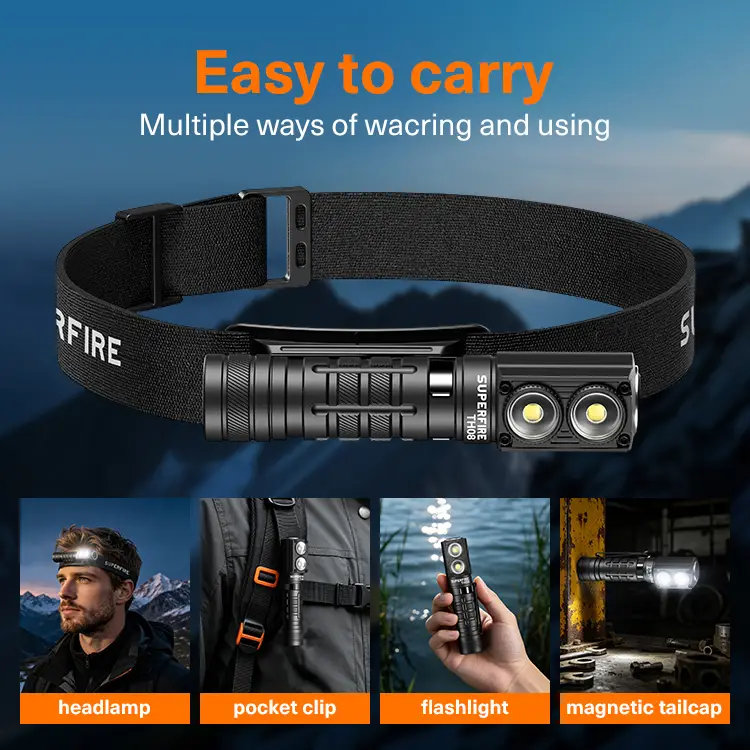
- EDC / pocket carry: 80–130mm length, 50–100g — fits in a uniform pocket or belt holster.
- Belt holster carry: 130–160mm, 100–180g — standard duty size.
- Weapon-mounted: Compact, low-profile, with rail mount compatibility (Picatinny / M-LOK).
Holster compatibility: Ensure the flashlight works with standard duty holsters (rotating, open-top, or retention models). A removable pocket clip adds carry flexibility for plainclothes or off-duty use.
7. Additional Features Worth Evaluating
- Strobe mode: Disorienting high-frequency flash for tactical encounters — should be easily accessible but not accidentally triggered.
- SOS / beacon: For search-and-rescue and emergency signaling.
- Power bank output: USB-C output models can charge radios, body cams, or phones in the field.
- Laser aiming / white light combo: For weapon-mounted applications.
- Color temperature: Neutral white (4000–5000K) renders colors more accurately than cool blue-white, improving identification of subjects and evidence.
8. Compliance and Certification
For agency procurement and resale to law enforcement markets, verify:
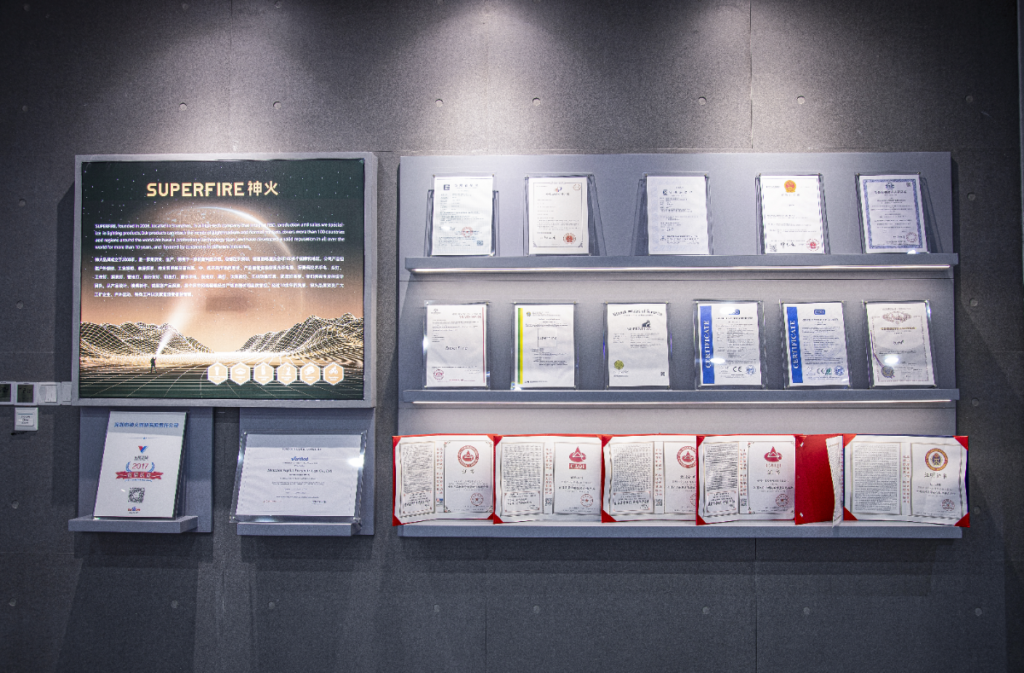
- CE / RoHS / FCC: Standard for EU and US market access.
- UN38.3: Required for lithium-ion battery shipping.
- Hazardous environment ratings: If deploying in potentially explosive atmospheres (e.g., drug lab raids, industrial sites), verify the specific certification requirements with your procurement team — not all duty lights carry hazardous-area ratings.
- NATO codification / Berry Amendment: May apply to certain government contracts.
- Agency-specific testing: Some departments require independent lab testing (e.g., ANSI FL1 standard for brightness and runtime claims).